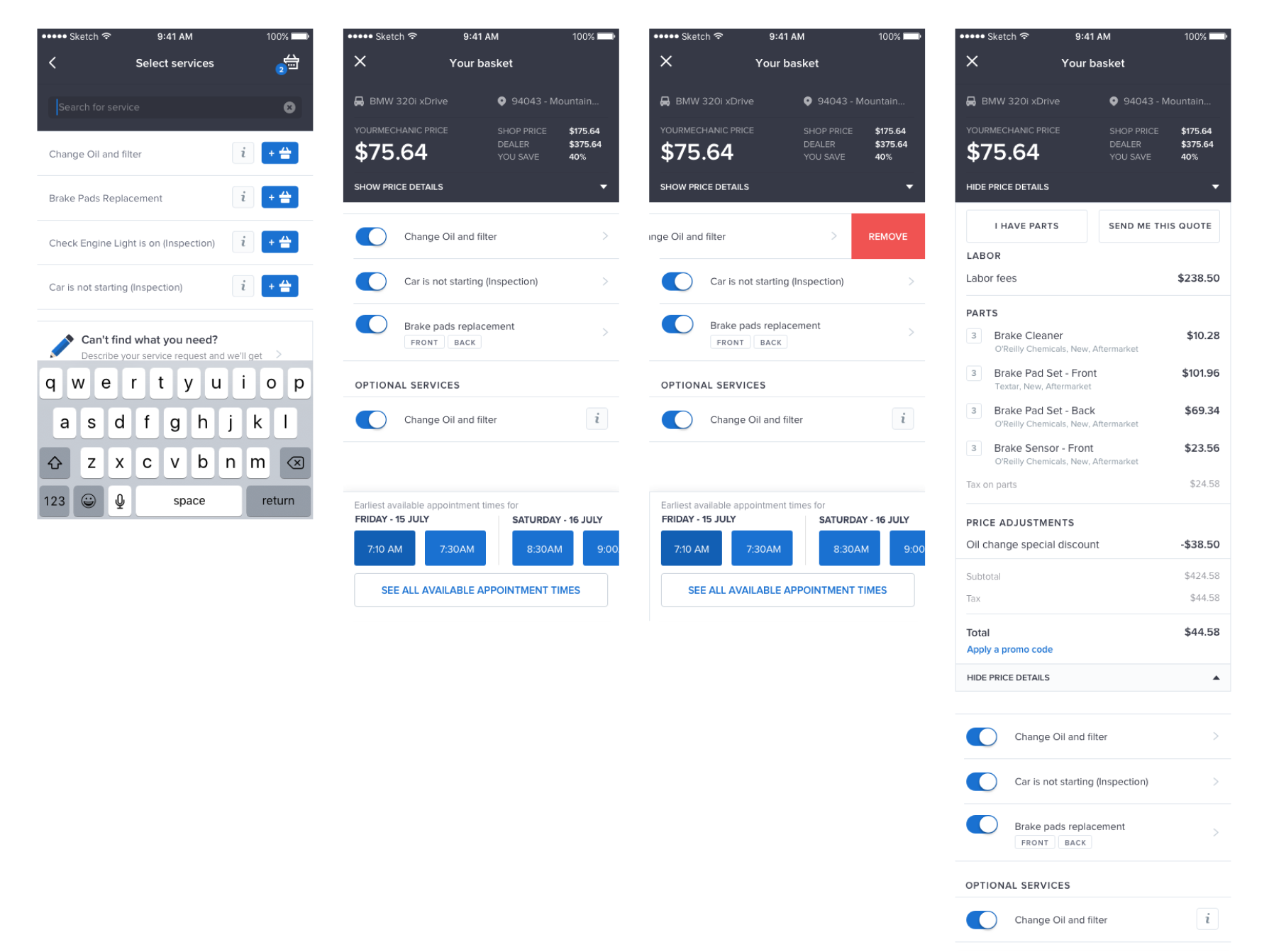
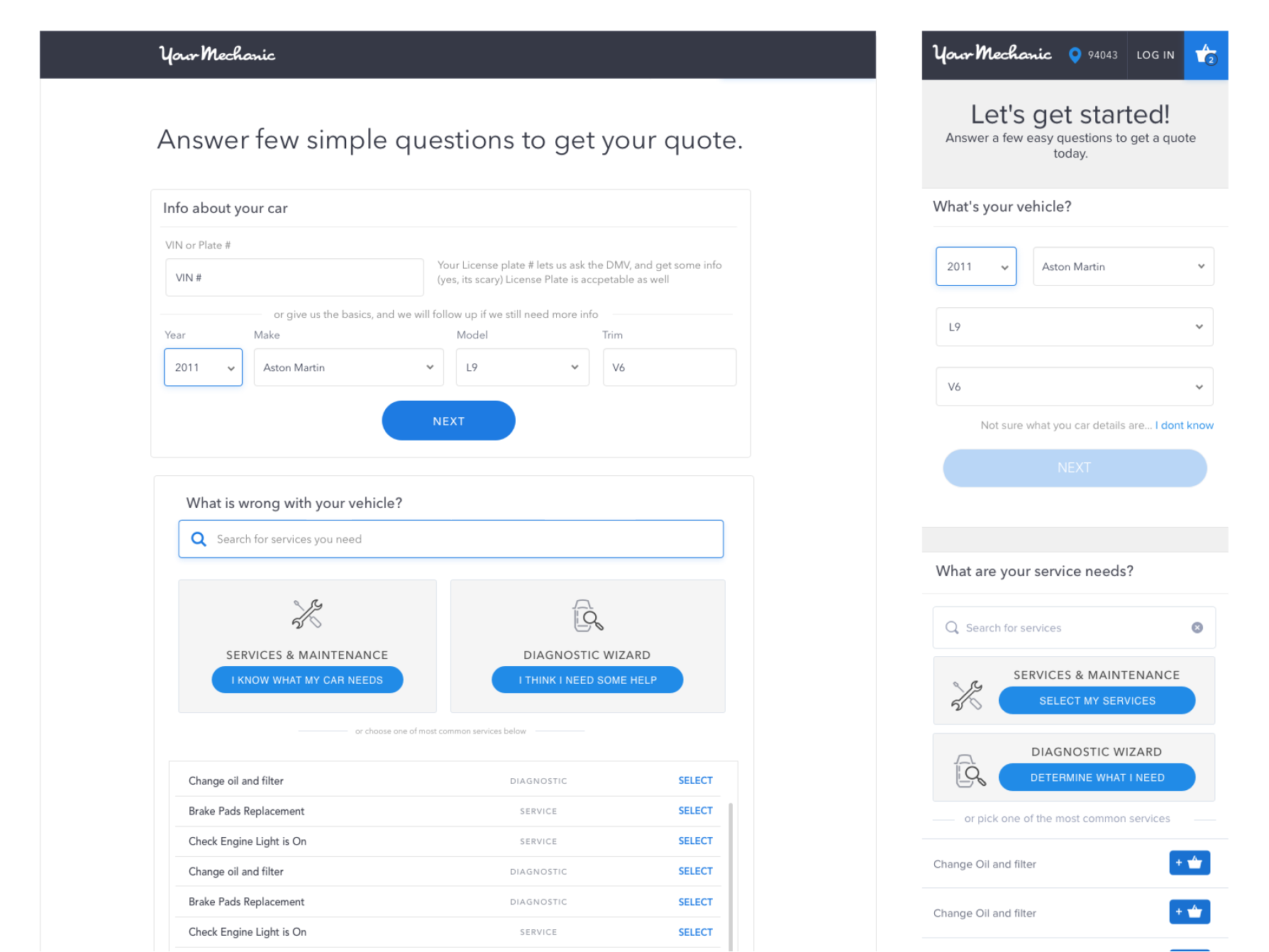
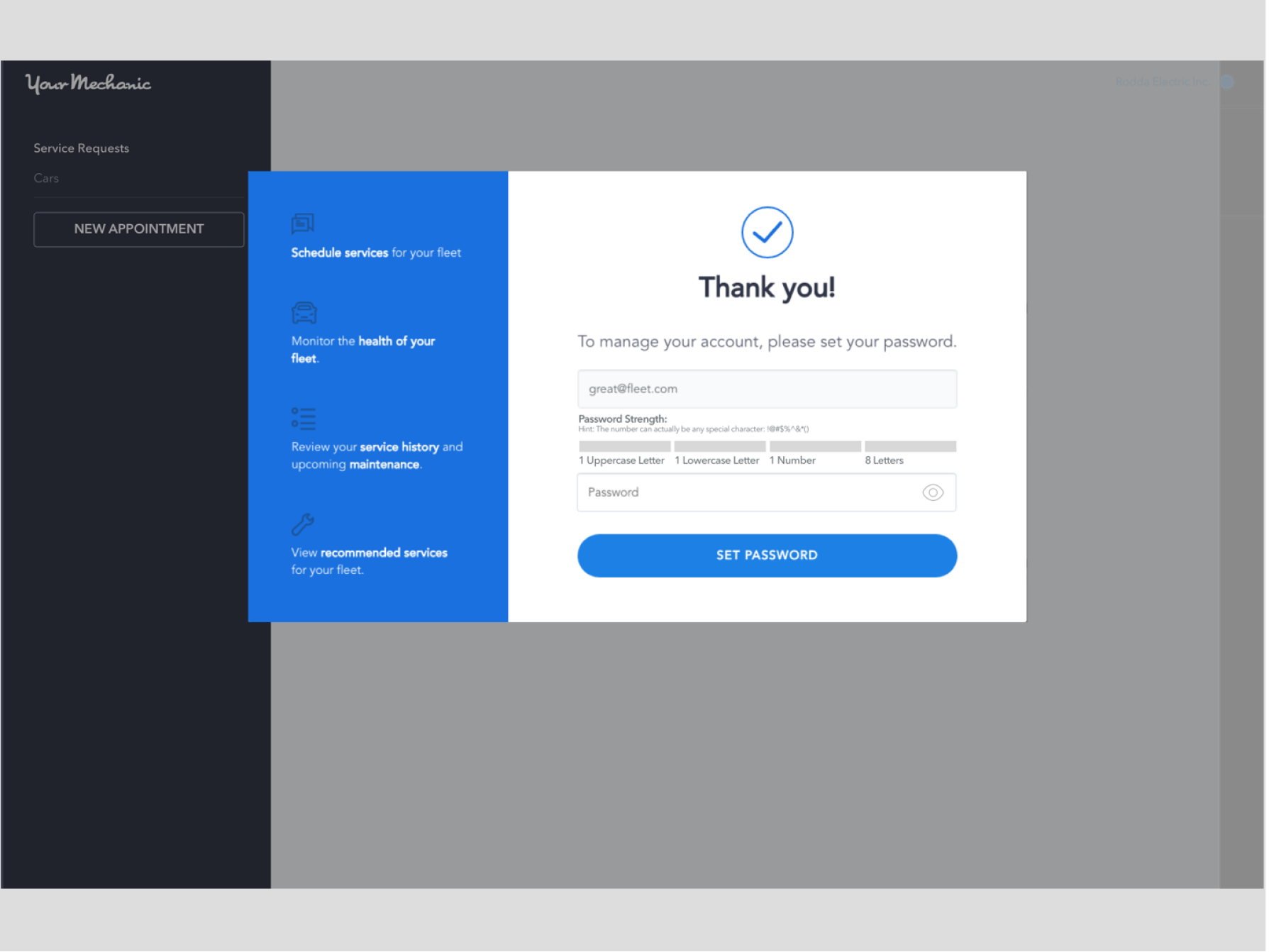

Web Site / Mobile Responsive
Creating a mobile mechanic app for both mobile and web, along with a white-labeled fleet app, using Lean UX principles involves a collaborative, iterative approach focused on delivering value quickly and efficiently. Here is how I approached designs :
Cross-Functional Team Formation:- Form a cross-functional team consisting of designers, developers, product managers, and stakeholders from both the mechanic service provider and fleet companies.
- Foster open communication and collaboration among team members to ensure alignment on goals and priorities.
- Conduct user research to understand the needs, pain points, and preferences of both mechanics and fleet operators.
- Create user personas representing different user segments, such as individual mechanics, fleet managers, and end-users requiring mechanical services.
- Define the core features and functionalities of the mechanic app and fleet app that are essential to address users' primary needs and provide value.
- Prioritize features based on user feedback, market demand, and technical feasibility to create an MVP that can be developed and tested quickly.
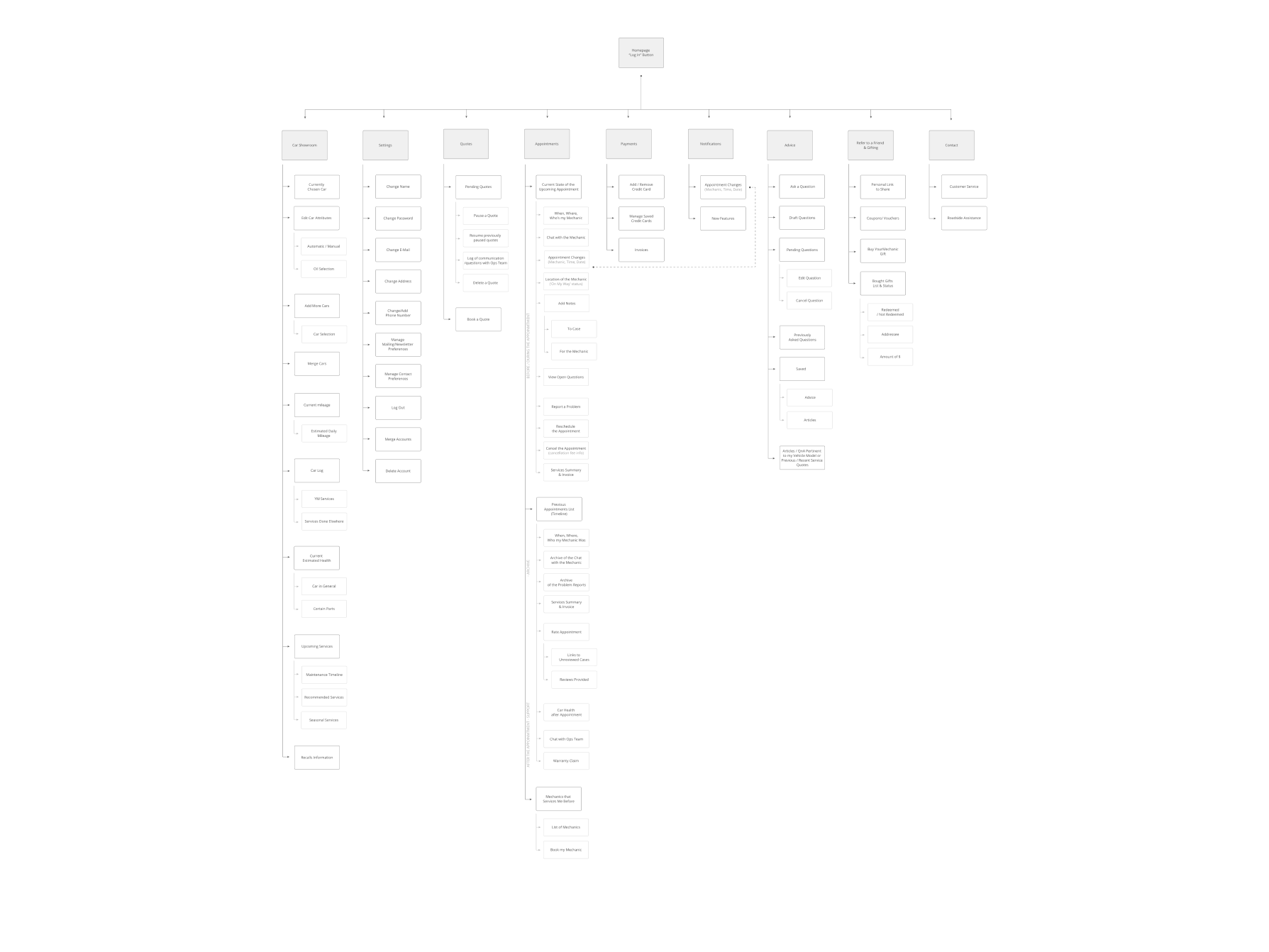
- Create low-fidelity wireframes or prototypes of the mechanic app and fleet app to visualize the user flow and interface elements.
- Gather feedback from stakeholders and end-users through rapid iteration cycles, making quick adjustments to the design based on user insights and usability testing.
- Adapt the design and user experience to meet the specific platform guidelines and conventions of mobile devices (iOS and Android) and web browsers.
- Leverage platform-specific UI components, navigation patterns, and interaction behaviors to ensure a native-like experience on each platform.
- Conduct usability testing and user feedback sessions throughout the design and development process to validate assumptions and identify areas for improvement.
- Use A/B testing and analytics to measure the effectiveness of design changes and feature enhancements, iterating based on real user data.
- Keep documentation lightweight and focused on essential information, such as user stories, design decisions, and feedback insights.
- Use collaborative tools and techniques, such as user story mapping and design studios, to facilitate communication and alignment within the team.
- Release early versions of the mechanic app and fleet app to a limited audience or beta testers to gather feedback and validate assumptions in a real-world environment.
- Continuously monitor user engagement, retention, and satisfaction metrics to identify opportunities for optimization and refinement.
- Establish a feedback loop to capture user feedback, iterate on the design based on insights, and prioritize feature enhancements and bug fixes.
- Embrace a culture of continuous improvement, where the team is empowered to experiment, learn from failures, and evolve the products iteratively over time.
- Apply Lean UX principles not only to design but also to product management practices, such as prioritizing features based on user value, minimizing waste, and focusing on delivering outcomes rather than outputs.
By applying Lean UX principles to the design and development of the mobile mechanic app and white-labeled fleet app, you can streamline the process, reduce development time, and deliver user-centered products that meet the needs of mechanics, fleet operators, and end-users effectively.
If you would like links to any of the figma files - or you would like to schedule a call to learn more...please let me know.